Showing posts with label Japanese. Show all posts

Oct 30, 2011

[Japanese] Weather Forecast & Seasons of the Year!

The seasons result from the Earth's axis being tilted to its orbital plane; it deviates by an angle of approximately 23.5 degrees. Thus, at any given time during summer or winter, one part of the planet is more directly exposed to the rays of the Sun (see Fig. 1). This exposure alternates as the Earth revolves in its orbit. Therefore, at any given time, regardless of season, the northern and southern hemispheres experience opposite seasons.
The effect of axis tilt is observable from the change in day length, and altitude of the Sun at noon (the culmination of the Sun), during a year… so-

STOP Onion Head Emoticons 63! STOP Onion Head Emoticons 63, STOP Onion Head Emoticons 63, STOP Onion Head Emoticons 63!
Oh, sorry (for going off-topic Ali the racoon Emoticons 14…)…


*Kaoko made a tea and sat beside the window*
Kaoko: あぁ、 世界を見ながらお茶を飲むとさいこうだわ! (Ā〜  sekai wo minagara ocha wo nomu to saikou da wa.) - Ah~ Drinking tea while viewing the world is the best Onion Head Emoticons 32.

Oct 14, 2011

[Japanese] Jikan-chan! It’s Time! Clocks & Time Reading!


Yuki: ね、カオコちゃん、今何時? (Ne, Kaoko-chan, ima nan ji?) - Hey, Kaoko-chan. What time is it now?
Kaoko: 十一時五分だよ。 (Juu ichi ji go fun da yo.) - It’s fifty past eleven.

In this lecture, I, Kaoko-sama… will be teaching how to read times in Japanese, and many few other things. I have posted a post about numbers and counting, so I hope you’ve already read them, or you’ve already know how to count from zero to hundred (and that’s fair enough).
Reading time in Japanese is very simple. Like saying 5 o’clock, you’ll just have to add ji, after the number: go ji (five o’clock), roku ji (six o’clock), nana ji (seven o’clock), etc.
Anyway, let’s learn everything in order!

Oct 13, 2011

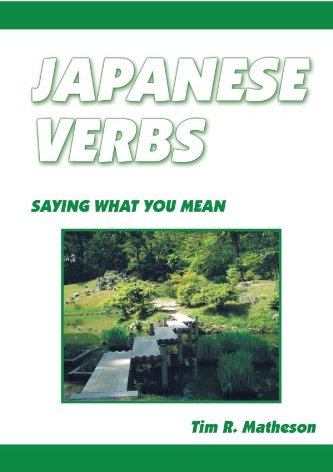
[Book Review] Japanese Verbs: Saying What You Mean

This book helped me a lot in my Japanese studies! Simple explanation, good examples, and wonderful teacher!
First I knew about Tim-sensei (the book’s author) was when I was looking for a website which teaches you about Japanese verbs. His site came first on the google search list. The website was very simple and I find it really useful; many notes to take, many lessons to learn from, and many other things.
Because I didn’t have a printer back then, I use to take 2 hours of my time a day, and sit next to the laptop with a notebook and my pencil case.
I will copy each lesson with a determined heart. Until one day I ended up buying the book from the Amazon!
I never regretted my choice. It really did help me in many ways!

Oct 9, 2011

[Japanese] Numbers & Counting


Japanese counting is easy. You just have to memorize basic numbers, and you’ll find the rest of the trials easy.
No.
漢字 - Kanji
ひらがな - Hiragana
English
1
一
いち (ichi)
One
2
二
に (ni)
Two
3
三
さん (san)
Three
4
四
よん (yon), or し (shi)
Four
5
五
ご (go)
Five
6
六
ろく (roku)
Six
7
七
なな (nana), or しち (shichi)
Seven
8
八
はち (hachi)
Eight
9
九
きゅう (kyuu)
Nine
10
十
じゅう (juu)
Ten
100
百
ひゃく (hyaku)
Hundred
1000
千
せん (sen), orいっせん (issen)
Thousand

Jun 17, 2011

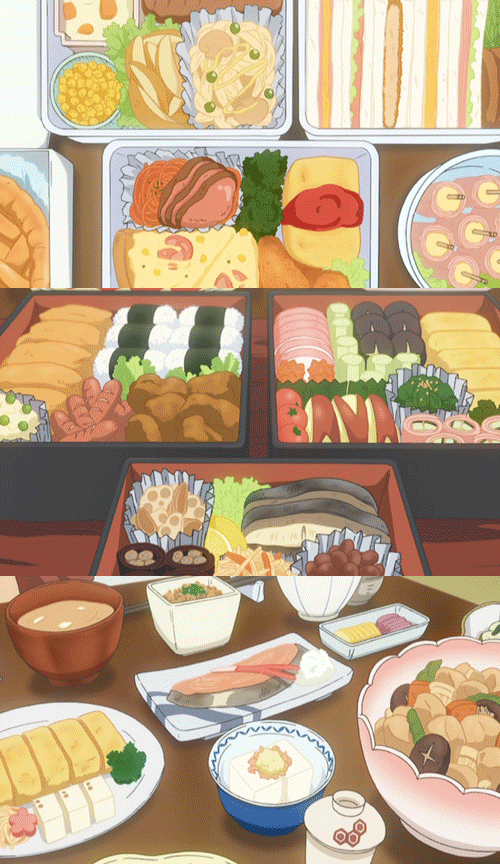
[Japanese] Gohan-chan! My Stomach Is Empty!


Kaoko: 母ちゃん!お腹が すいた!今食べたいの! お昼ご飯はまだか? (Kaa-chan! Onaka ga suita wa! Gohan wa mada ka?) -> Mom! I'm hungry! Is the lunch ready yet?
Mother: うるさいわよ!(urusai wa yo!) -> Be quite (or, you are annoying)!

Uh, I guess the topic for today is food-meal-relating Japanese lesson!

Jun 14, 2011

[Japanese Book] Kokugo ni-jō tanpopo


This is a Japanese elementary book for grade two (I think/guess). I got this book from a Japanese embassy here in the country I am currently living in. It's cool to learn the way how native children learn. It's too bad I only got this book at the moment (I wish at least I'd have the first book).
I begin learning with this book after I mastered all the Kana characters and after getting to know some of the Kanji characters.
It won't get you anywhere if you just opened the book without having to know anything of how Japanese system works.
Even after I learnt the Japanese verbs from Tim-sensei, adjectives, particles, etc.

Jun 12, 2011

[Japanese] Laugh Your Head Off! Smile To Your Heart's Content!

Person 1: What is a verb for 'laugh' in Japanese? :3
Person 2: 笑う (warau)
Person 1: Then, what is a verb for 'smile' in Japanese? :3
Person 2: 笑う (warau)
Person 1: ...


Yup, it may sounds absurd. But the verb for smile and laugh can share the same word in Japanese. Or at least, that's what I've noticed so far.
  • 笑む/えむ (emu)

Jun 5, 2011

Japanese Phrases - Itterasshai! Ittekimasu!


When you shall say... itterasshai... and... ittekimasu... lesson.

These phrases are very Japanese, and do not have literal translation.

行ってらっしゃい (itterasshai): You say this to someone when they are leaving home, either for work, school, etc. Which often translated to -> see you [later]; have a good day, have a safe journey; take care, etc.
Japanese people say this to express their hope that family members will come back to the house safely.

LinkWithin

Related Posts Plugin for WordPress, Blogger...